


What Causes Hard Water Stains On Windows And How To Remove Them
Are your windows looking cloudy and hazy? Hard water stains are the main culprit that can spoil the overall look and feel of your window glass. The worst part is that nasty streaks don’t disappear even after regular cleaning or washing. All your efforts can go in vain despite using store bought cleaning products. In fact, abrasive scrubbing can leave scratches behind, leading to costly repairs.
Fret not! In this guide, we will understand the common causes of hard water stains on windows and proven hacks to remove them. This unsightly white residue forms when water high in minerals, such as calcium and magnesium, dries on the glass surface, leaving behind nasty streaks.
With this guide, you can restore the shine of your sparkling window glass using all natural cleaning methods. You can also hire experts for a guaranteed vacate cleaning Perth and secure your hard earned bond money. The following tips are also tried and tested by professional cleaners to make your life easier.
Let’s Get Started!
Hide
Show
- What causes Hard Water Stains on Window Glasses?
- Use White Vinegar To Remove Hard Water Stains
- Sparkle Your Windows With Baking Soda
- Rubbing Alcohol Can Eliminate Hard Water Spots From Glass
- What are the Key Precautions for DIY Window Cleaning?
- How to Prevent Hard Water Stains on Windows?
- Infographic: A Cleaning Guide to Removing Hard Water Stains from Windows
- Wrapping Up
1. What causes Hard Water Stains on Window Glasses?
Hard water is a common household problem that usually occurs when groundwater passes through limestone, gypsum, and chalk deposits. It contains high concentrations of minerals, such as calcium and magnesium. These minerals can increase the hardness in water, causing nasty stains when evaporates from the glass surface.
Hard water stains appear white, cloudy, and hazy, ruining the overall look and feel of your home. Here are some common causes of hard water stains on window glass:
- Lawn Sprinklers and Irrigation: If your lawn has a sprinkler, the water frequently hits the exterior of your windows, leaving mineral residue behind when it dries.
- Raindrops and Environmental Aspects: Believe it or not! Rainwater can also cause hard water stains on windows. It tends to collect dust, pollutants and minerals, leaving cloudy spots.
- Hose Water: Washing your car, driveway, exterior walls or patio area with hard water can also cause nasty stains.
Over time, these calcium and magnesium deposits can etch the glass, leading to permanent damage.
2. Use White Vinegar To Remove Hard Water Stains
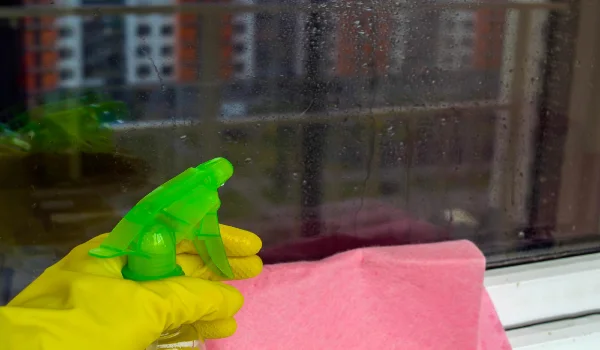
There is no denying that White Vinegar is one of the most versatile natural cleaning agents, especially for eliminating hard water stains. Acetic acid in vinegar can effectively break down calcium and mineral deposits. The best part is that it won’t damage the delicate glass surface. Here’s a step by step cleaning guide:
- Mix equal parts of vinegar and warm water into a spray bottle.
- Apply it to the affected area and let it sit for half an hour.
- Gently scrub the affected area with a sponge.
- Wash with water, then wipe down with a microfibre cloth.
- Run a squeegee from top to bottom to remove vinegar residue and excess water. This won’t leave streaks behind.
3. Sparkle Your Windows With Baking Soda
Known as sodium bicarbonate, Baking soda is another great option that can help dissolve calcium deposits from almost all surfaces, including window glass. Vacate cleaning: Perth Professionals recommend using a thick baking soda and water paste for spotless results.
Apply this paste to hard water stains and leave it for a few minutes, or until you scrub. Repeat if required, wash with water and follow up with a squeegee step. This will transform your window glass into spotless beauty, helping you impress your fussy landlord when moving out.
4. Rubbing Alcohol Can Eliminate Hard Water Spots From Glass
Rubbing alcohol is another super effective cleaning agent that can tackle hard water stains, especially on surfaces like glass and chrome. The product evaporates quickly, leaving a streak behind, saving you time and energy.
Make sure you avoid using it on sealed wood and painted surfaces, as it can damage the finish. Also, keep doors and windows open for proper ventilation.
5. What are the Key Precautions for DIY Window Cleaning?
If you are cleaning windows for the first time, ensure you test your DIY cleaning solution on a small, inconspicuous area to see how it reacts. Also, avoid using abrasive tools. Instead, focus on using soft bristled brushes or a sponge for scrubbing. Use a microfibre cloth instead of feather dusters to prevent scratches.
When it comes to safety, wear rubber gloves to protect your hands from vinegar and other cleaning chemicals. If the stains don’t come off, repeat the process or call experts for a quality vacate cleaning Perth. You can ask relevant questions before making the final decision.
6. How to Prevent Hard Water Stains on Windows?
First things first! Install a water softener to prevent calcium and magnesium deposits that can cause nasty stains. Also, make sure your lawn sprinkler is away from the window glass to prevent water exposure. Also, carefully conduct a pressure washing session, away from windows, when clean your driveways.
You can also apply a glass sealant or protective coating to repel water and avoid stains. Apart from this, maintain regular cleaning to remove dust, dirt, moisture buildup and mild mineral deposits.
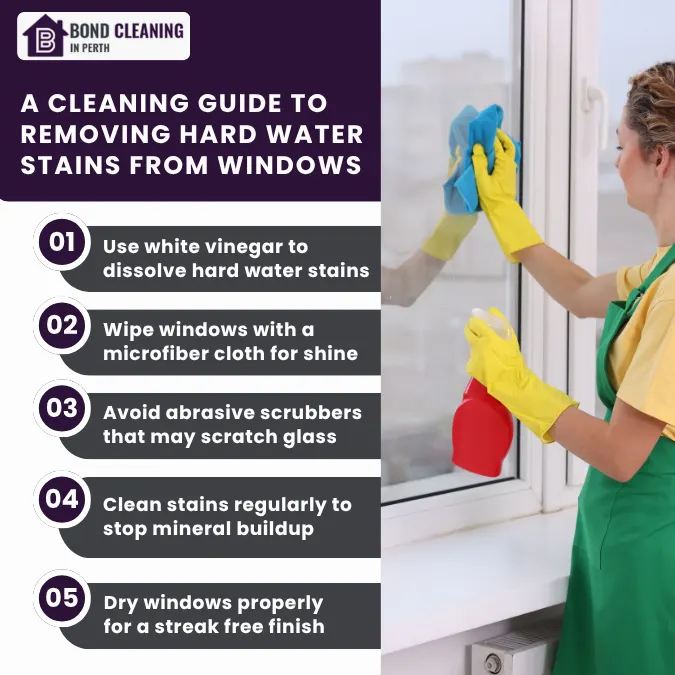
Infographic: A Cleaning Guide to Removing Hard Water Stains from Windows
Wrapping Up
Hard water stains are tough to remove, especially from window glass. Hopefully, this cleaning guide will help you achieve spotless results without any damage or scratches. Make sure you treat the hard water problem and tackle stains using eco friendly products.