


How To Reduce And Control Dust In Your Home?
Dust often gets neglected when sprucing up a home. It tends to accumulate on ceiling fans, light fixtures, fittings, window sills, carpets, and shelf tops. Household dust usually contains dead skin cells, pollen, fine particles, pet dander, dust mites and other allergens, polluting the indoor air quality. In 2022, around 6.1 million Aussies were estimated to have allergic rhinitis. It is an allergic condition that occurs when your immune system reacts to an airborne irritant.
To reduce and control dust at home, regular dusting, vacuuming, sweeping, and mopping are core fundamentals. You should create a proper housekeeping schedule to prioritise dust laden surfaces. This will help you create a tidy and breathable indoor environment, especially for kids and people with pre existing allergy systems.
Worry not! We bring you a comprehensive guide to help reduce dust in your home using the best methods. Ensure you stock up on all the necessary dusting supplies to save time and energy. If you’re running at the end of your lease, hire expert vacate cleaning Perth professionals and secure your hard earned bond money.
Let’s Get Started!
Hide
Show
- Is Indoor Air Pollution Hazardous?
- Get Rid of Clutter Regularly
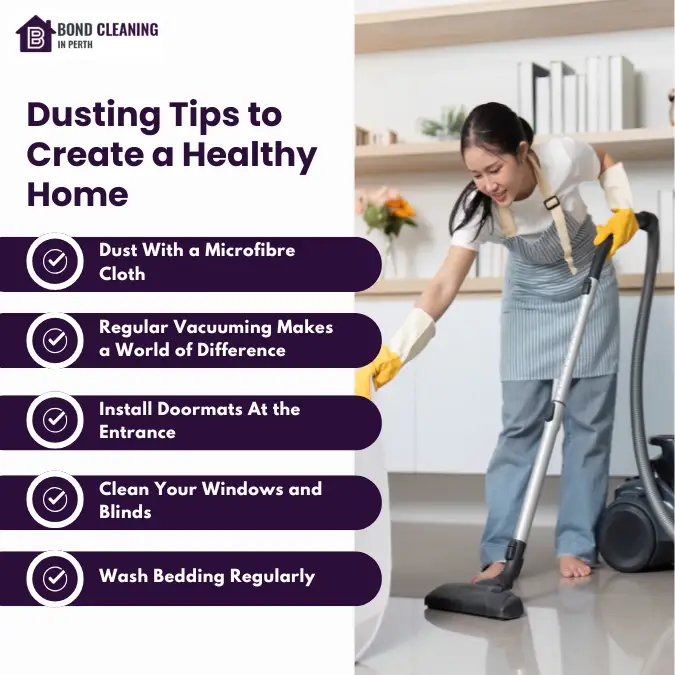
- Dust With a Microfibre Cloth
- Regular Vacuuming Makes a World of Difference
- Install Doormats At the Entrance
- Clean Your Windows and Blinds
- Change Air Filters
- Wash Bedding Regularly
- Infographic For Dusting Tips to Create a Healthy Home
- Wrapping Up
1. Is Indoor Air Pollution Hazardous?
Indoor air pollution can be harmful. It is because household dust usually includes components from plants, microorganisms, skin flakes, fibres, pollen and hair. It also includes materials contaminated with chemicals from interior materials, electronics, cleaning agents and furniture. Since people spend most of their time indoors, regular exposure to dust and harmful pollens can have an adverse health impact, such as:
- Persistent Coughing
- Hay Fever
- Wheezing
- Breathing problems
- Inhaling mould spores and dust mites can irritate airways, triggering asthma and chronic bronchitis.
- Allergic reactions
- Skin allergies, and
- other chronic health conditions
2. Get Rid of Clutter Regularly
There is no denying that a cluttered, unnecessary home tends to attract dust mites and allergens. Pollen can accumulate anywhere, polluting the indoor air. Therefore, it is essential to reduce clutter and keep your home organised. With minimal stuff and clean spaces, it automatically reduces dust in your home.
Get rid of unwanted household items, broken materials, and outdated furniture. You can even stash crafts, seasonal gear and decorative pieces in storage bins. A well organised home can accelerate the entire dusting process.
Note: Donate pre loved household items to reduce landfill waste.
3. Dust With a Microfibre Cloth
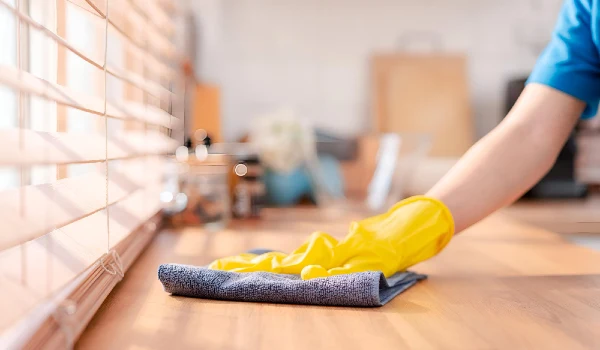
Professional Vacate Cleaning Perth recommends using a top to bottom dusting approach to cover all nooks and crannies. Use a damp microfibre cloth rather than a dry cloth to eliminate dust particles and pollens from surfaces. Start dusting from your ceiling fan blades, light fixtures, fittings, mouldings, cabinet tops, picture frames, window glasses, sills, door baseboards and floors.
Tip: Dust your home regularly to maintain a clean and tidy home environment.
4. Regular Vacuuming Makes a World of Difference
Delicate floor coverings and furnishings, such as carpets, rugs, couches, and cushions, tend to trap embedded dirt, pet dander, and allergens deep within their fibres. These can pollute the indoor air quality, which can trigger pre existing allergies.
To remove dust from delicate flooring and furnishings, use a HEPA friendly vacuum cleaner with a brush attachment. It can fetch embedded dust and allergens without any damage or discolouration. Run a vacuum slowly and steadily, and clean once a week to maintain fresh, sparkling carpets.
If you are renting with pets, vacuum every two days to prevent dust buildup.
5. Install Doormats At the Entrance
Believe it or not! Placing a doormat at the entrance can reduce your stress faster than ever. They trap dust before it enters your home via dirty shoes. Make sure you wash or vacuum doormats regularly to maintain a dust free home.
6. Clean Your Windows and Blinds
Windows are the gateway to the outer world and fresh air. However, it tends to accumulate dust, dirt, and debris, which can cause indoor air pollution. Make sure you regularly wash your windows inside and out, vacuum your blinds, wash your curtains, and clean the tracks and frames. You can follow a proper guide and tools to achieve streak free windows like a pro. Make sure you deep clean floors, windows and walls to protect your bond money.
7. Change Air Filters
HVAC systems in a home can circulate allergens and pollen if the filter remains clogged for a long period. First things first! Vacuum or wash your air filters using a white vinegar solution. It is also good to change filters every two months to keep the indoor air fresh.
8. Wash Bedding Regularly
According to microbiologists, dust mites feed on dead skin cells found in your dirty bed linens, such as bed sheets, cushions and quilts. Make sure you wash your bed linens weekly to reduce dust buildup. This promotes better night sleep, ensuring mental wellbeing. You can prefer hiring experts for a quality vacate cleaning Perth to secure your hard earned bond money. They clean every nook and cranny to give you peace of mind.
Infographic For Dusting Tips to Create a Healthy Home
Wrapping Up
Following these simple hacks can help you reduce the amount of dust in your home. These can help you maintain a clean, organised and breathable indoor environment while preventing potential health hazards. Happy dusting!