


Oven, Rangehood & Stovetop Cleaning: Bond Level Standards
Property managers/landlords in Western Australia closely inspect every nook and cranny of the premises before releasing the bond. Unfortunately, many tenants focus only on surfaces like walls, windows, doors, carpets and floors, and forget about kitchen appliances. In Perth, majority of bond deductions or disputes occur due to dirty ovens, greasy rangehoods or overlooked stovetops.
These kitchen appliances may not receive the required attention from tenants, but landlords check them inside and out to maintain indoor hygiene. From burnt food particles to buildup grease and mould stains, your much loved kitchen appliances take a lot of abuse that needs to be removed properly to prevent germ infestation and foodborne illnesses.
Failing to achieve spotless results could lead to serious repercussions at the end of your lease. Fret not! Today, we’ll be sharing an indepth guide on degreasing ovens, rangehoods and stovetops according to bond level standards. It covers every possible hack to help you restore their shine with safe, sound products. You can also prefer hiring vacate cleaning Perth professionals for a stress free move out experience. They follow a proper checklist to achieve spotless shine before the final rental inspection.
Let’s Get Started!
Hide
Show
- What are Bond Cleaning Standards for Oven, Rangehood and Stovetop in Perth?
- Stock up on Cleaning Supplies For Spotless Results
- Step by Step Oven Cleaning Guide to Meet Bond Standards
- How to Achieve a Bond Leven Rangehood Cleaning?
- The standard process to clean the stovetop
- When to Hire Professional Bond Cleaners
- Infographic For Cleaning Oven, Rangehood and Stovetop to Secure Bond
- Wrapping Up
1. What are Bond Cleaning Standards for Oven, Rangehood and Stovetop in Perth?
Maintenance of the rental home, including kitchen appliances and fixtures, is a responsibility of both tenants and landlords. While landlords are responsible for maintaining the minimum standards and responding to repair requests promptly, tenants are responsible for maintaining the same level of cleanliness and hygiene throughout the lease.
Under the Residential Tenancy Laws in Western Australia, renters/tenants must return the property, including the oven, rangehood, and stovetop, in the same condition it was at the start of the tenancy, beyond fair wear and tear.
Make sure you remove burnt food particles, caked on grease, oil splatters, sauce spills, stains, mould and bad odours inside and outside these cooking appliances. If you want to avoid unfair bond deductions or disputes, click time stamped photos post cleaning as evidence.
Tip: Refer to your initial condition report, as you are not responsible for pre existing dirt and damage.
2. Stock up on Cleaning Supplies For Spotless Results
Before getting into the process, gather all the cleaning supplies you will need to tackle cooking grime and gunk on delicate appliances. Use non caustic, rust free and natural cleaning products like vinegar, baking soda, castile soap, lemon, essential oil and dishwashing soap. Also, use warm water for removing soap residue. For scrubbing stains, use non abrasive brushes, like an old toothbrush, a magic eraser and other sponges. Keep all supplies in a moving cleaning caddy to save time and energy. You can also use eco friendly cleaning tips to reduce your carbon footprints.
3. Step by Step Oven Cleaning Guide to Meet Bond Standards
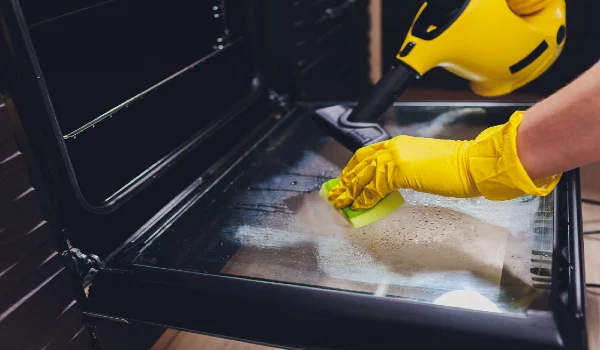
First things first! Turn off your oven to prevent an electrical hazard. If it is still hold, let it cool down completely. After that, follow these steps:
Step 1: Prepare Your Oven
Begin the process by removing the racks, trays and pans from your oven. You can place a cloth or paper towel on the surface to catch loose food particles to prevent a mess. This is the best time to wipe down your appliance to remove dirt, food particles and gunk using a damp microfibre cloth. Do it gently.
Step 2: Soak Greasy Trays and Racks in Hot Soapy Water
Submerge grease laden oven trays, racks and grates in hot, soapy water. You can mix hot water, white vinegar, and dishwashing soap, then soak your detachable parts for at least half an hour. This will easily break down the gunk.
Step 3: Coat Your Oven With Baking Soda
Prepare a baking soda paste and warm water and coat the inside of the oven, including walls and crannies. Avoid applying it to the heating elements, glass doors, and gas vents. Leave it for half an hour. Professionals also use this hack while performing a guaranteed vacate cleaning Perth to achieve spotless results. Baking soda can do wonders in banishing grease and gunk with ease.
Step 4: Scrub the Interiors
Gently scrub the surface using a damp sponge. You can also use an old toothbrush to get into nooks and crannies to catch spills.
Step 5: Spray Vinegar Solution
Spray a white vinegar and warm water solution and spray inside the appliance and the interiors of the glass door. Leave it for another 10 minutes. Next, gently wipe down with a cloth to get rid of stains and grime residue.
If possible, unscrew glass panels to get rid of stuck gunk and grease.
Step 6: Clean the Knobs, handle and exterior part
Spray the vinegar solution on knobs, handle and door of your oven and wipe down with a clean cloth. Do not directly spray on the controls. Instead, dampen a cloth in the solution and wipe down the door.
Step 7: Scrub and Reattach Trays
Take your soaked trays out of the mixture and gently scrub them with a brush. Next, rinse them in running water and dry them completely before reattaching them to your oven.
4. How to Achieve a Bond Leven Rangehood Cleaning?
A rangehood is one of the most underrated kitchen appliances. Unfortunately, a clogged and overlooked rangehood poses a significant fire hazard. Buildup grease is highly flammable and can ignite during cooking. Thus, it is important to deep clean the rangehood and grease filters thoroughly and secure your bond. Here is a quick guide to achieve spotless results:
- De Grease Filters: Read the instructions carefully and remove the filters from your rangehood. For mesh or metal filters, soak them in hot water for 10 to 15 minutes to break down gunk. After soaking, gently scrub with a brush or sponge. For charcoal filters, replace them as they can’t be cleaned or soaked in water.
- Tackle Heavy Grease: Use baking soda to tackle stubborn food stains and grease. Leave it for 20 minutes until you scrub and wash them.
- Wipe Down the Interior Fan: Spray white vinegar solution and wipe down the interior surfaces carefully. Ensure you access the fan blades carefully to prevent injury.
- Clean the Ducts: Thoroughly inspect the ducts for blockages and carefully remove accessible debris using a long handled brush.
- Pay Attention to the Exterior: Use a microfibre cloth and a mild cleaner, such as vinegar or castile soap, to restore the shine of your rangehood. Clean the edges, underside panels and buttons, where grime accumulates. Do not scrub the surface when cleaning steel surfaces. This will help prevent scratches.
A clean and unclogged rangehood leaves a great impression on the landlord, helping you secure a full bond without any hassle.
5. The standard process to clean the stovetop
Home to countless delicious meals and heartwarming memories, the stovetop has emerged as the heart of your kitchen. However, it takes a lot of abuse every day due to cooking practices and spills. If you want to pass your rental inspection, focus on thoroughly cleaning your stovetop to meet the bond level standards.
To clean a gas stovetop, fill the sink or a container with warm water, a cup of vinegar and a few drops of dishwashing soap. Submerge the burger grates, plates, and control knobs to dislodge grime and grease. Meanwhile, spray the stovetop surface with white vinegar solution and leave it for 10 minutes. Next, wipe down the grime with a damp sponge or clean cloth. Make sure you scrub the grates and plates, rinse, and carefully reassemble after drying.
For heavy grime and stains, you can apply a lemon and vinegar solution to achieve spotless results.
6. When to Hire Professional Bond Cleaners
If you are concerned about your bond or want meticulous results at the end of your lease, make sure you hire professionals for a guaranteed vacate cleaning Perth. Do proper research and hire a reliable company within your estimated budget. You can create a customised bond cleaning package by adding extra services like oven or BBQ cleaning for a detailed service. They will help you secure your bond without any stress.
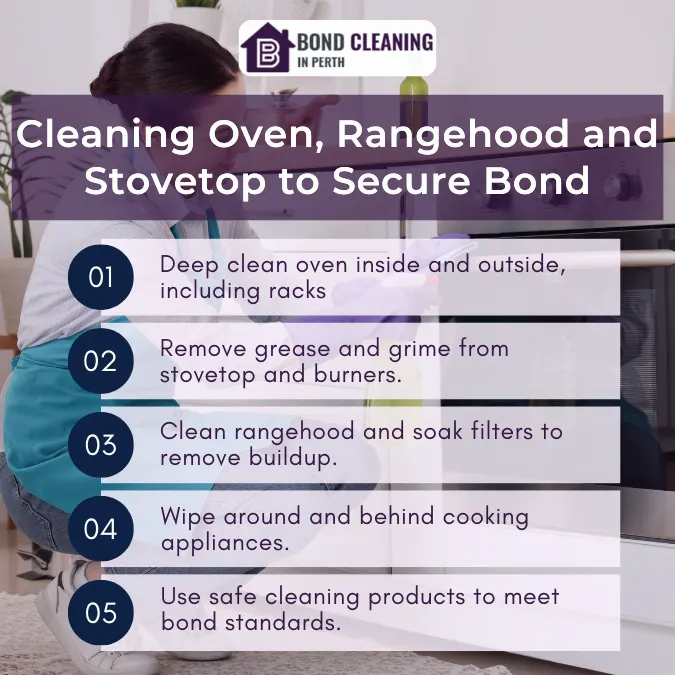
Infographic For Cleaning Oven, Rangehood and Stovetop to Secure Bond
Wrapping Up
Meeting the strict bond cleaning standards is not rocket science. You can consider these simple yet effective tips to clean the most essential kitchen appliances using all natural products. Ensure you read the manufacturer’s instructions, thoroughly inspect and deep clean the appliances with precision to secure your bond.