


Understanding ‘Reasonably Clean’ Under WA Tenancy Laws For Bond Refunds
While many tenants believe that the property must be immaculate in order to secure a bond refund, WA tenancy laws take a more balanced approach. The requirement here, is not perfection but “reasonable cleanliness” beyond normal wear and tear. Understanding the necessary obligations can help avoid costly penalties and disagreement over cleaning. In Western Australia, the emphasis is on whether the property has been restored in a condition that a regular person would deem acceptable, rather than reaching a hotel like appearance. This means that both tenants and landlords will benefit from knowing where the legal threshold actually sits.
This article will be breaking down what “reasonably clean” means under Western Australian tenancy legislation and how it applies in real bond refund scenarios. It also covers practical methods for preparing the property at the end of a lease, identifies common points of contention, and explains how evidence may help ensure a smooth transition. Additionally, tenants can choose to hire budget vacate cleaning Perth services to guarantee they reach the required level without causing additional stress. This way, renters can be confident that they have fulfilled their commitments and increased their chances of receiving their bond.
Hide
Show
- What “Reasonably Clean” Means in a Legal Context
- The Role of the Property Condition Report
- Common Areas of Dispute and How to Avoid Them
- Understanding What Fair Wear And Tear Is
- Practical Cleaning Tips for Meeting “Reasonably Clean” Standard
- When Disputes Arise: How Bond Claims Are Assessed
- Infographic: What is ‘Reasonably Clean’ in WA Tenancy Laws?
- Wrapping Up
1. What “Reasonably Clean” Means in a Legal Context
The phrase “reasonably clean” appears throughout Western Australia’s Residential Tenancies Act and related guidelines, however it is not defined mathematically. Instead, its definition is based on what a reasonable person would consider suitable, taking into account the property’s age, condition, and quality at the start of the tenancy. This prevents landlords from expecting tenants to deliver a level of cleanliness beyond what was originally provided.
Reasonableness also recognises that homes experience normal use. For example, surfaces may show signs of ageing, paint may fade and fixtures may wear down over time. Tenants are not required to restore the property to “as new” condition. The key is to ensure that dirt, grime and avoidable build up are removed and that the premises are left sanitary and functional for the next occupants.
2. The Role of the Property Condition Report

The Property Condition Report (PCR) is the most important document when assessing cleanliness at the end of a tenancy. Completed at both the start and the end of the lease, it serves as a reference point for determining what has changed in the property during the rental period. If the property was not spotless at the outset, the tenant cannot be held to a higher standard at the end.
Tenants should review the initial PCR carefully to ensure that any pre existing issues such as marks on walls, mould in the bathroom or unclean appliances were properly recorded. Likewise, completing and returning the outgoing PCR promptly ensures the tenant’s perspective is captured. The more accurate the documentation, the easier it is to show that the property has been returned in a reasonably clean state.
3. Common Areas of Dispute and How to Avoid Them
Cleanliness issues usually happen, in areas that demand further care during a vacate clean. Kitchens, bathrooms and flooring, are the most common source of conflict, owing to the accumulation of grease, soap scum, mildew and grime over time. Even if tenants believe they have cleaned fully, certain places may have been ignored or not cleaned, to a satisfactory level. Bathroom fittings, shower screens and tiles, must be thoroughly scrubbed to remove any residue. Ovens and rangehoods in the kitchen, must be thoroughly cleaned because landlords and property managers frequently inspect them.
Carpets should be vacuumed and, if specified by the lease or pet conditions, professionally steam cleaned. Some renters choose to engage, professional vacate cleaning Perth services, for specific jobs such as oven cleaning or grout treatment, which can be difficult to handle without the proper instruments. Paying attention to details such as window tracks, light switches, skirting boards and ceiling fans, might help to avoid arguments. These small places can quickly collect dust or grime, and may be marked during the final inspection.
4. Understanding What Fair Wear And Tear Is
One of the most critical distinctions for tenants, is “damage” vs. “fair wear and tear.” Fair wear and tear refers to degradation, caused by routine use and the natural ageing, of the property. For example, carpet flattening in high traffic areas or faded curtains, from sunlight exposure would be considered fair wear and tear, not negligence.
Cleanliness assessments must be separate from damage assessments. A tenant may leave a room generally clean but if a wall, has been chipped or a door has been broken, maintenance expenses, may still apply. Conversely, a home may be undamaged but yet left in a dirty state, causing cleaning deductions. Understanding the distinction encourages tenants, to address both cleaning, and maintenance concerns, before leaving.
5. Practical Cleaning Tips for Meeting “Reasonably Clean” Standard
Preparing a rental property for a final inspection takes time but tenants should plan ahead, to ensure no details are overlooked. Begin early, to eliminate the need for hasty cleaning. Start by addressing larger projects such as kitchens and bathrooms. These rooms need the most work and may necessitate, multiple cleaning sessions. It is also beneficial to work systematically from top to bottom. Dust the ceilings, fans, and light fixtures first, as material may fall to lower surfaces. Then clean the walls, windows, countertops and cabinets.
Finish with the floors, to prevent having to clean them again after dusting. Outdoor spaces such as balconies, porches, garages, and gardens should not be overlooked. Remove cobwebs, sweep and clear debris, to improve overall cleanliness. Tenants can also seek out professional aid. The engagement of expert vacate cleaning Perth firms, can be very beneficial for people with limited time, large houses or demanding work commitments. These workers understand local property managers’ expectations and can rapidly clean the home, to bond ready standards.
6. When Disputes Arise: How Bond Claims Are Assessed
If there are concerns over cleanliness the bond claims process, offers a formal framework for resolving them. Landlords who believe, the property was not left adequately clean, may seek to withhold a portion or the entire bond. The renter can either accept, or reject the claim. If no agreement is achieved within a specific term, the case may be referred to the Magistrates Court.
Tenants who have taken photos, saved receipts, and recorded cleaning efforts are typically in a better position during a dispute. Evidence is vital especially if the landlord claims, that certain areas were kept unclean. Courts often consider, whether the landlord’s expectations were reasonable, and if the renter, reached the legally needed threshold. In most cases, conflicts are addressed by comparing the ingoing and outgoing, condition reports and evaluating the photographic evidence, supplied by both sides.
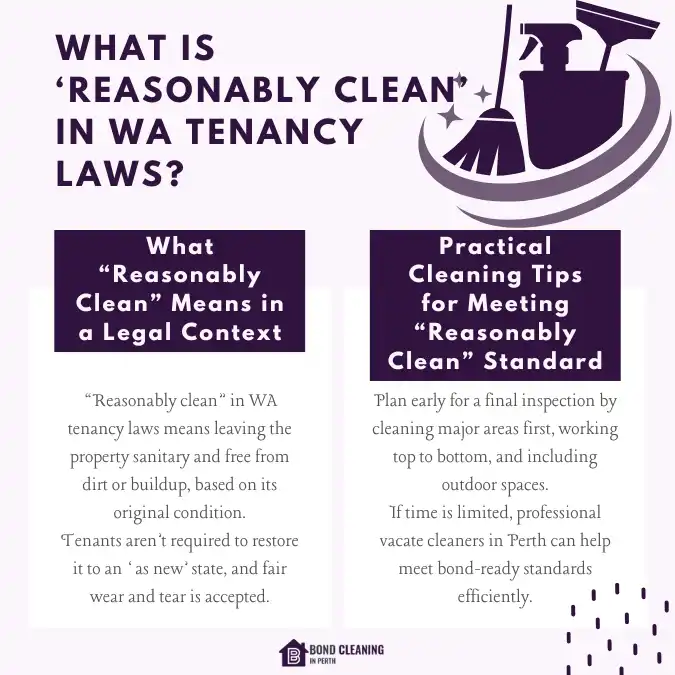
Infographic: What is ‘Reasonably Clean’ in WA Tenancy Laws?
Wrapping Up
Understanding what “reasonably clean” means under WA tenancy legislation, allows tenants to meet their commitments, without overextending themselves. Most tenants can avoid disagreements totally, by matching their cleaning efforts to the condition of the property, at the beginning of the lease, keeping accurate records, and addressing common problem areas. With careful planning and understanding, of legal procedures both tenants and landlords, may ensure a seamless transition and bond return process.